

It happens every day
Your team spends human judgment on entirely predictable work.
We turn manual tasks and disconnected tools into systems that work together. So your company gains time, capacity and control.
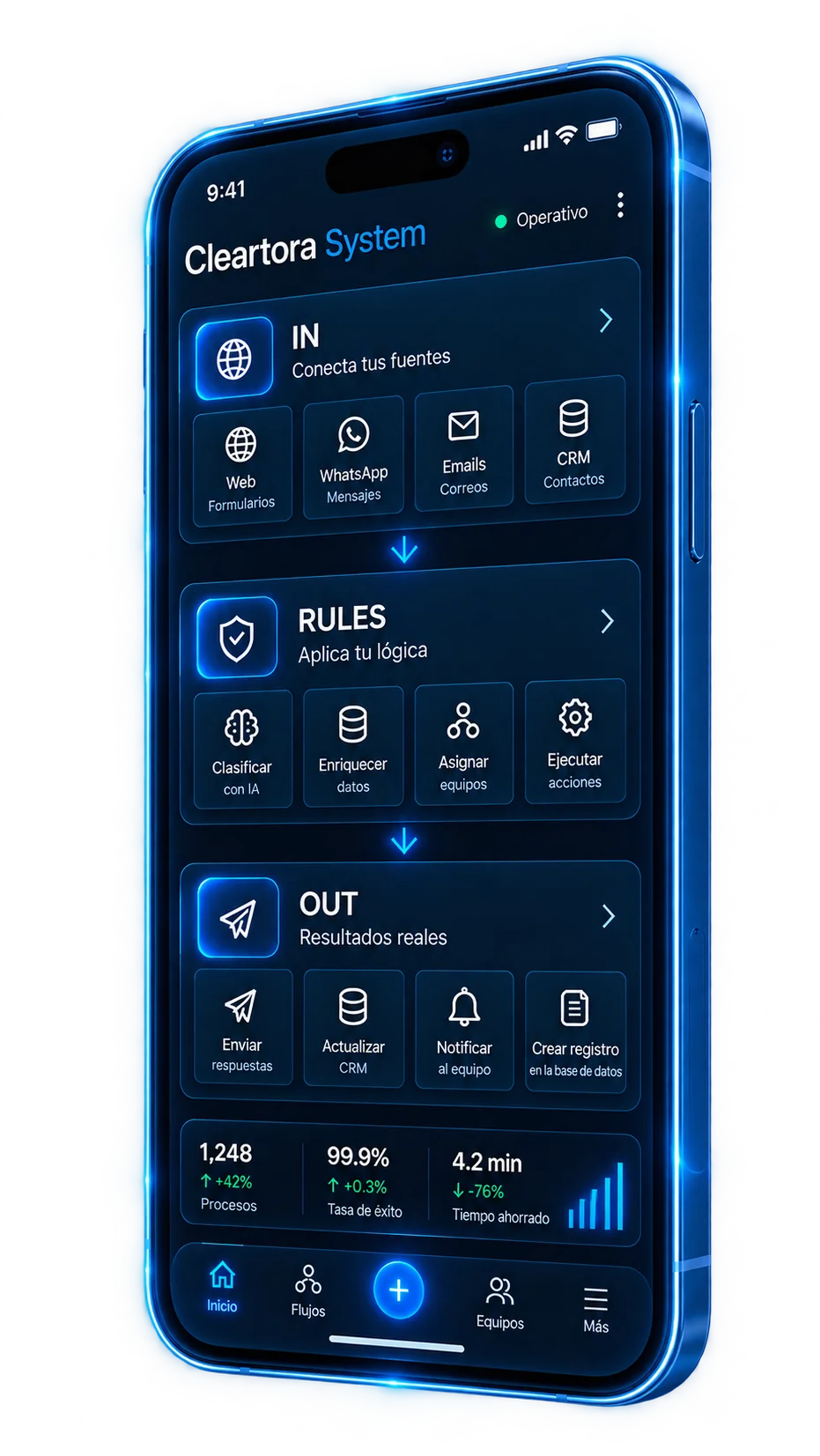
First we work out what's slowing you down. Then we pick the technology.
We answer calls and messages, resolve questions, qualify opportunities and book appointments even when your team is busy.
We automate follow-ups, documents, invoices and admin work, so people can focus on the work that actually needs judgment.
We connect your tools so data is updated once and available to everyone.
We start from an existing solution when it fits and build what's missing. You can license its use without having to buy the whole thing.
The system works out what they need, checks availability, confirms the appointment and updates the records. Your team picks up the work ready to continue.
Interactive demonstration using fictional data and figures. It does not show real activity or guaranteed results.
 OpenAI
 Anthropic
 ElevenLabs
 Twilio
 Supabase
 PostgreSQL
 n8n
n8n Docker
 WhatsApp
 HubSpot
 Holded
 Odoo
Odoo Slack
Slack Gmail
Gmail Calendar OpenAI Anthropic ElevenLabs Twilio Supabase PostgreSQL n8n Docker
If a process repeats, grows with your volume and depends on someone remembering, it's probably eating more capacity than it looks.
Your team spends human judgment on entirely predictable work.
Taking on more volume means hiring more people to do the same thing.
When that person isn't there, the process slows down or stops.
Data is duplicated, arrives late, or turns into errors.
A process that is frequent, measurable and critical shouldn't rely on memory, copy-paste or chasing people.
See how we solved it for other businessesReal systems that turn pending tasks, enquiries and documents into operations that carry on without stalling.
These are real cases. We protect our clients' identity, which is why we don't show their names or brands.
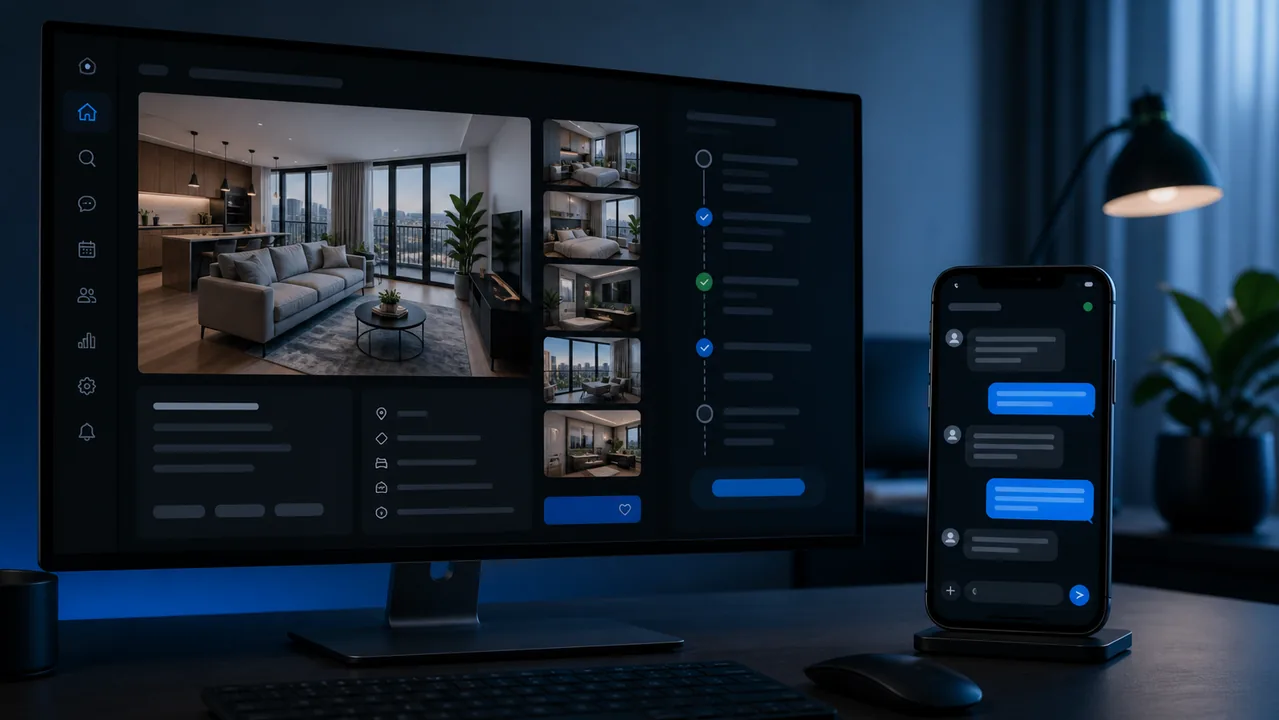
Every enquiry gets an answer and a follow-up until the viewing is confirmed.
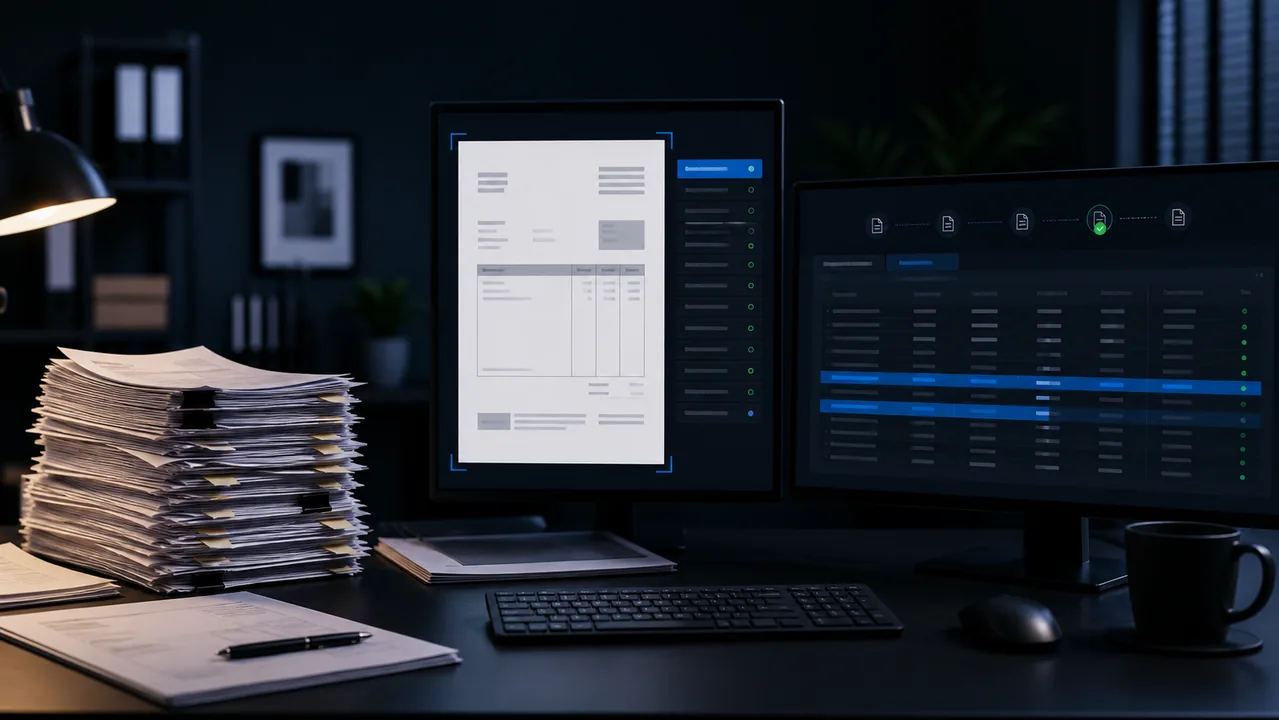
Invoices arrive, get classified and end up ready to post, without anyone re-typing the same data.
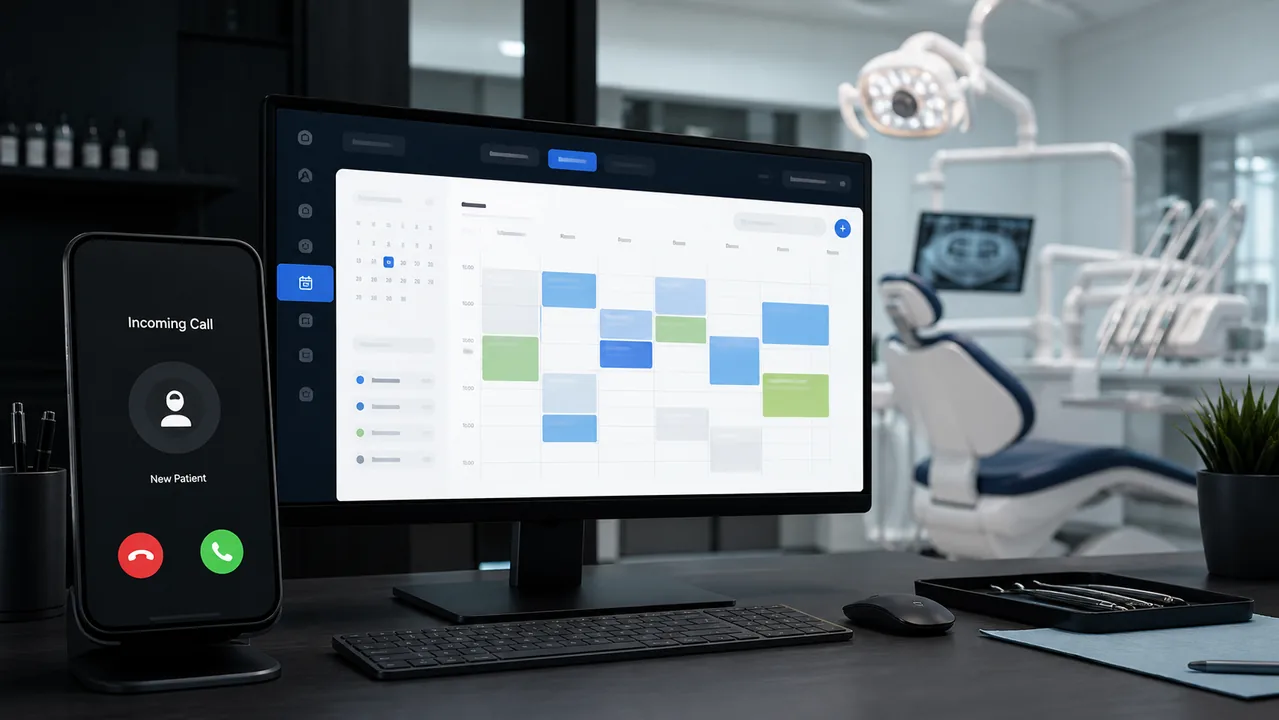
Every call can turn into a confirmed appointment, even when the team is busy.
See how different companies removed the work that was holding back their growth.
See all cases →You don't need to know which technology to use. Just tell us what should be working better.
We go through the process with you and pinpoint where time, opportunities or information are being lost.
We define the solution, the scope, the investment and the terms of use with you before starting.
We plan the rollout with you to keep the disruption to day-to-day work low. Then we stay with your team until they can run the system themselves.
No jargon and no vague promises: what you need in order to judge whether this is a fit.
No. Tell us what's happening and what should be working better. We'll work out whether the answer is automation, connecting your tools, building software or using AI.
No. We use AI when it gives a real advantage. If conventional automation or custom software solves the problem better, we choose that instead.
Yes, as long as it's technically and operationally viable. We'd rather build on what already works than make you replace tools for no reason.
It depends on the solution, the licence, the rollout and the services you need. You don't have to commission a full build if an existing solution fits. The proposal sets out what's included, any upfront and recurring costs, and any handover of code or transfer of rights agreed.
A simple automation can be ready in days; a custom system can take several weeks. We'll agree the timings and deliverables with you before we start.
First we look at your enquiry. If we think we can help, we set up a 20-minute conversation to understand what you need and define the next step. If it isn't a fit, we'll tell you plainly.
Data handling is defined project by project. Where it applies, we document responsibilities, providers, security measures and the data processing agreement.
The licence lets you use the solution under the terms agreed. By default it does not include ownership of the software, handover of the code or exclusivity. A custom build does not by itself transfer any rights either: any handover of code or transfer of rights is agreed and priced explicitly.
We'll tell you plainly. The first conversation exists to check whether we can add value before we propose any work at all.
We'll focus on understanding how you work, what's slowing you down and what needs to change. From there we'll assess with you whether we can help and what the next step would be.